
Inscendence & inscendental art explained
In short, inscendence signifies immersion into the depths of nature, outer and inner.

Looking at etymology, linguistics, our spiritual and artistic practice we present the following definitions:
transcend
from trans “across, beyond” + scandere “to climb”; from PIE *skand
= to spring, leap, climb beyond
transcendence
= the quality or state of excelling, surmounting, moving beyond or above the range of normal or physical human experience
inscendence
= quality or process of going into nature (inner nature/one’s body and outward nature/the external world), into full experience,
toward wholehearted participation (& toward holoflux)
= immersion in the living world
inscendental art
= art that offers pathways of primal, generative imagination toward the inscendental, i.e. the possible human experiences of inscendence (including a taste of holoflux);
Inscendental art in short
distance removal (visually, emotionally, spatially, …)
primal participation (as with music, cognitive and precognitive)
visceral meaning-immersing (facilitating an erotics of art, not a hermeneutics!) (read more)
Digging further into the above meanings, we discern the following:
The problem with transcendence
In many contexts transcendence is considered a goal, a desired state, whether it be overcoming the “ego” or surmounting the “physical” or “material” limitations. Very frequently the state of one’s body is actually denied in the process.
Religious followers, spiritual seekers, transhumanists, virtual reality adepts, …, commonly pursue some form of transcendence i.e. an escape.
This is highly problematic since it does not confront the world’s many problems at hand, on the contrary, it creates inner division and it cultivates resignation and passivity.
Transcendence is good if it is just a phase, it can be insightful, but transcendence without grounding and effects on our whole organism, has little meaning.
The shortcomings of transcendental art

© Alex Grey
Transcendental art definitely has its merits.
However, it is a mix of fantasy, felt experience and/or hypothesis. It usually generates distance for the observer because the images are out of reach or hard to fathom.
As the transcendental picture is not directly accessible, it easily becomes artificial, superfluous eye candy, an aesthetic work of science fiction.
Purely mental identification with a fantasy image is a limited affair.
Transcendental art is not to be rejected, we just want to complement with more accessible ways of depicting.
What is inscendence?
When we inscend, we take a step back or down,
returning to our inborn nature, our pre-rational core.
Inscending involves a more contextual, intuitive approach to life and our surroundings,
rooted in the physical world (body and wider environment/context).
It is an inner process of connection, relation, integration.
It involves equanimity with all that is, both joyful and painful.
It affects awareness, agency and responsibility.
One could also say that inscendence is finding transcendence in ordinary, everyday life, which fundamentally alters one’s daily reality.
Inscendence could prove indispensable to fully confront the ecological crisis, the climate emergency and the crisis of meaning.
Inscendental art
Inscendental art aspires to close or narrow the gap between the mind’s eye and the world and the body.
Pictures/forms that have a directness, a liveliness to them, so that one feels moved to join in and participate, empathize, sympathize, feel compassionate.
During the creation process, subject and object are undivided. Becoming one with the subject matter they are trying to depict, the artist (and viewer?) are in a wildly creative yet subtle zone of impressions, intuitions and expressions.
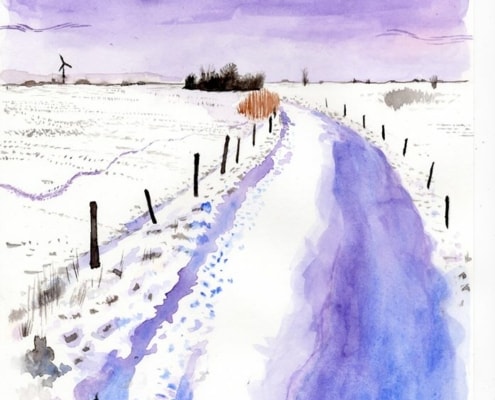
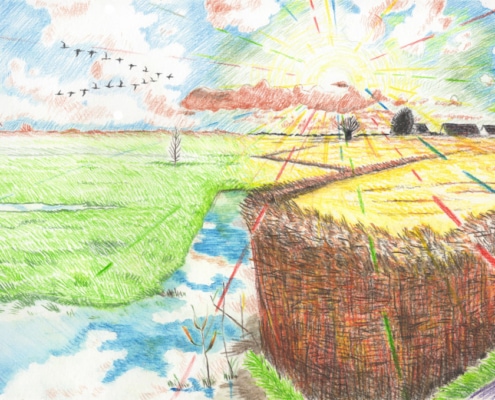
Inscendental art is meant to spark insight into the infinite richness of nature and the world, altering primary perception in the observer. A work of art can make us look differently at the world after seeing it, even altering our conception of what we consider reality. David Hockney’s later landscape work is a great example of this, bringing out aspects of color and spatiality that elude many of us.
Essential to this key feature is the artist’s ardor to look more attentively and to become aware of their primal, generative imagination, i.e. how images are formed unconsciously by body and mind, which in turn can inspire new ways of imagining and capturing the fruits on canvas/paper/clay/…

© David Hockney Foundation
Inscendental art is usually a combination of abstraction and photographic elements, it is the merging of abstraction and naturalism, more akin to how we actually perceive the world, could perceive the world differently and how we can participate in/with it. It tries to unlock human imaginative potential.
It aims to question what is considered “real” or “realistic”, breaking away from the ubiquitous conventions of linear perspective and photography. This is why we came up with the term ‘phorography‘, to push the importance of ‘phororealism’
As remarked by David Hockney, in Chinese painting it is said that you need the eye, the heart and the hand to create great works. Two will not do.
More info in the FAQ below.
Related notions/concepts
“contexting” &“generative imagination” (Hoorne)
“shinjin datsuraku (casting off body(-as-object) and mind(-as-subject))身心脫落)” & “kannō dōkō” (felt interresonance 感應道交) (Eihei Dōgen)
“final participation” (Owen Barfield)
“proprioception of thought” (David Bohm)
“holoflux/holomovement” (David Bohm)
“rheosoma” & “holosoma” (Lee Nichol)
“attunement through the body” (Shigenori Nagatomo)
“eutierria” (Glenn A. Albrecht)
“(Inscendence is ) the impulse not to rise above the world (transcendence)
but to climb into it, seek its core.” (Thomas Berry)
Frequently Asked Questions
Is this inscendental art something new?
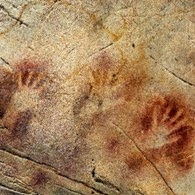
No, this lively, participative quality has existed for a very long time.
It is present in Chinese and Japanese prints and paintings, in certain comic strips, in art movements from the past (impressionism, post-impressonism, cubism, …), and it goes back to paintings and hand stencils made by Neanderthal people about 40,000 years ago(!).

© Franquin

Hokusai
Is inscendental art another art movement?
It could be one some day. The idea of stressing inscendence and the observer’s participation is to highlight a quality that has existed for millennia in human art and human expression.
At first glance, one can see many similarities with Post-Impressionism (which never was a movement anyway, just a label).
However, many Post-Impressionists had an overly subjective approach to their subject matter.
Inscendental art aspires to inscend the subjective and objective approach, integrating them in a holistic approach.
 In a way this is a new approach to Realism/Naturalism, but explicitly breaking away from photography (see: phorography).
From our point of view many of Van Gogh’s paintings are inscendental in nature.
A lot of your artwork does not live up to this inscendental ideal or quality?!!
No doubt! But the artwork is moving more and more in that direction.
Does inscendence require a different sort of imagination?
Inscendence can be reached without imagination, but if art or imagery is involved, a so-called generative imagination is crucial to have a more direct and participative way of engaging, of creatively regenerating or co-generating what one is confronted with.
In other words: a static, photographic perspective cannot resonate with the dynamic actuality of the world (and the artwork, if applicable).
In music, the flowing, ineffable qualities are usually obvious and easy to step into, and in video too to some extent (but the subject-object dichotomy is much more present usually), triggering resonance and fine sensibilities within the listener or viewer. This flux resonance can also be triggered visually, by means of the body and generative imagination.
What’s the connection with your contexting philosophy?
Movement and context are key.
Inscending is the movement toward contexting (a form of generative imagination), since our body is the most immediate context that we can be intimately in touch with. This involves a somatopsychic process where mental subjectivity and body-as-object fall away to a state of somatic agency.
In simple words: intuition, (formerly) unconscious processes broaden perception, and other functions of the organism, the active context informs the organism.
Contexting is participatory
Inscendental art is not an illustration of an idea or a static representation, it attempts to convey a living context in which you can participate (or not)
Do I need to know about this underlying theory to enjoy the artwork?
Not at all! But it can help you what to look at, and to discover inscendental qualities across art movements, throughout art history.
What is the difference between transcendental and inscendental art?
Transcendental art tends to be largely Utopian, depicting altered states of consciousness, idealized image of what the “new age” would look like.
In general, there is even more distance between the viewer and transcendental art than between the viewer and more traditional, naturalist art.
Inscendental art attempts to be actually non-dual in nature, in its generation of form, space, movement and time, by luring the viewer into participation and engagement through creative perception/imagination.
Where does this term ‘inscendence’ come from?
From time to time, we like to come up with new terms. After multiple considerations for a word that described what has been bubbling up in our artwork in recent years, at the same time focused on our issues with the word ‘transcendence’, ‘inscendence’ seemed the most fitting.
A quick internet search showed that someone beat us to it in the late ’90s: Thomas Berry (01914 – 02009), cultural historian and spiritual ecologist.
To our surprise, the meaning he gave to ‘inscendence’ was pretty much in line with our thinking, it broadened our initial perspective even.
We think it would be great if the term got used more generally and casually and thus simply became part of our common cultural vocabulary.
What about music? Can music be inscendental?
For sure, music is probably the most potentially inscendental art form out there. Music that feeds the soul and that moves body and mind, that is. It can be found in many genres.
Inscendentie
& Inscendente kunst
transcenderen
van trans “over, voorbij” + scandere “klimmen”; van PIE *skand
= springen over, klimmen over
transcendentie
= overstijging; bovenzinnelijk bewustzijn;
inscendentie
= het proces van in de wereld klimmen, in de natuur (innerlijke natuur én de buitenwereld), in de volle menselijke ervaring; volledige participatie, ten volle beleven, (richting holoflux)
= onderdompeling in de levende wereld (holoflux)
inscendente kunst
= kunst die primaire, generatieve verbeelding omvat en presenteert als poort naar het inscendente, d.w.z. potentieel menselijke belevenissen van inscendentie (inclusief een vleugje holoflux);
Het probleem met transcendentie
Op veel terreinen wordt transcendentie gezien als het ultieme doel, een gewenste staat van zijn, zij het door het overstijgen van het “ego” of door het overstijgen van lichamelijke of materiële beperkingen.
Religieuze volgers, spirituele zoekers, transhumanisten, fans van virtuele realiteit en “the metaverse”, … ze zijn allemaal op zoek naar een vorm van transcendentie, d.w.z. een vlucht.
Dit is erg problematisch aangezien transcenderen niet de vele wereldproblemen in beschouwing neemt of aanpakt, integendeel, het zorgt voor innerlijke verdeeldheid en cultiveert terugtrekking en passiviteit.
De tekortkomingen van transcendente kunst
(c) Alex Grey
Transcendente kunst heeft zekere haar verdiensten.
Echter, het is veelal een mix van fantasie, beleefde ervaring en vrije aannames. Het creëert doorgaans afstand voor de kijker omdat de beelden moeilijk te vatten of te bereiken zijn.
Omdat een transcendente afbeelding niet direct toegankelijk is kan die gemakkelijk vervallen in een soort artificieel werk van science fiction, oppervlakkige strelingen voor het oog.
Transcendente kunst moet zeker niet verdwijnen, we willen enkel iets complementair maken met meer toegankelijke manieren van afbeelden.
Wat is inscendentie?
Wanneer we inscenderen nemen we een stap terug of naar onder, keren we terug naar onze aangeboren natuur, onze pre-rationele kern.
Dit betekent een meer contextuele, intuïtieve benadering van het leven en onze omgeving, gegrond in de fysieke wereld (het lichaam en de omgeving).
Inscendentie zou wel eens onmisbaar kunnen zijn om de ecologische crisis, de klimaaturgentie en de crisis rond zingeving in het leven aan te pakken.
Inscendente kunst
Inscendente kunst beoogt om de kloof tussen het bewustzijn en de wereld + het lichaam te verkleinen of te dichten.
Afbeeldingen die een directheid, een levendigheid in zich dragen, zodat men bewogen wordt om erin mee te gaan en te participeren, mee te leven, mee te voelen, …
Tijdens het creatieve proces valt het onderscheid tussen onderwerp en voorwerp weg. Eén wordend met het onderwerp dat ze trachten weer te geven, begeven kunstenaars (en de kijkers?) zich in een wilde maar subtiele creatieve zone vol impressies en expressies.
Inscendente kunst is bedoeld om inzicht te geven in de oneindige rijkdom van de natuur en de wereld, en om de primaire blik van de kijker te veranderen. Een kunstwerk kan ons anders doen kijken naar de wereld na het gezien te hebben, of zelfs onze bevatting van de realiteit wijzigen. David Hockney’s latere periodes zijn een goed voorbeeld hiervan, met zijn manier om bepaalde aspecten qua kleur en ruimtebeleving naar voor te brengen die aan de meeste mensen voorbij zouden gaan.
Het is hierbij essentieel dat de kunstenaar volhardt in het beter observeren en het bewust worden van de verbeeldingsprocessen, d.w.z. hoe beelden onbewust worden gevormd door lichaam en geest, een bewustwording die op zijn beurt nieuwe manieren van kijken/verbeelden kan bewerkstelligen, met andere resultaten op het canvas/papier/…
Inscendente kunst is meestal een combinatie van abstracte en figuratieve, meer fotografische elementen, het is een soort samengaan van abstractie en naturalisme, meer verwant met hoe we de wereld in levende lijve zien, hoe we ze zouden kunnen zien, en hoe we erin/ermee kunnen participeren. Het tracht menselijk verbeeldingspotentieel te ontsluiten.
Inscendente kunst probeert te bevragen wat “echt” of “realistisch” is, terwijl het losbreekt van alomtegenwoordige conventies van lineair perspectief en fotografie. (Dit is de reden waarom we de term ‘forografie‘ uitvonden, om het belang van ‘fororealisme’ duidelijk te maken.
Meer info in de veelgestelde vragen hieronder.
(c) David Hockney Foundation
Verwante begrippen/concepten
“contexting” &“generatieve verbeelding” (Hoorne)
“shinjin datsuraku” (Eihei Dōgen)
“final participation” (Owen Barfield)
“proprioception of thought” (David Bohm)
“holoflux/holomovement” (David Bohm)
“rheosoma” (Lee Nichol)
“attunement through the body” (Shigenori Nagatomo)
“eutierria” (Glenn A. Albrecht)
““(Inscendentie is) de impuls om niet boven de wereld uit te stijgen (transcendentie), maar om erin te klimmen, de kern ervan te zoeken.” (Thomas Berry)
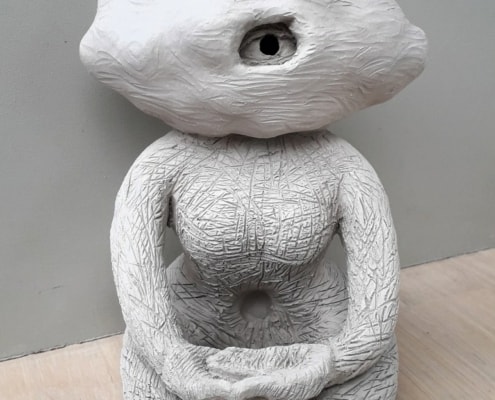
Veelgestelde vragen
Is inscendente kunst iets nieuws?
Nee, absoluut niet! Deze participatieve kwaliteit in de kunst bestaat al zeer lang.
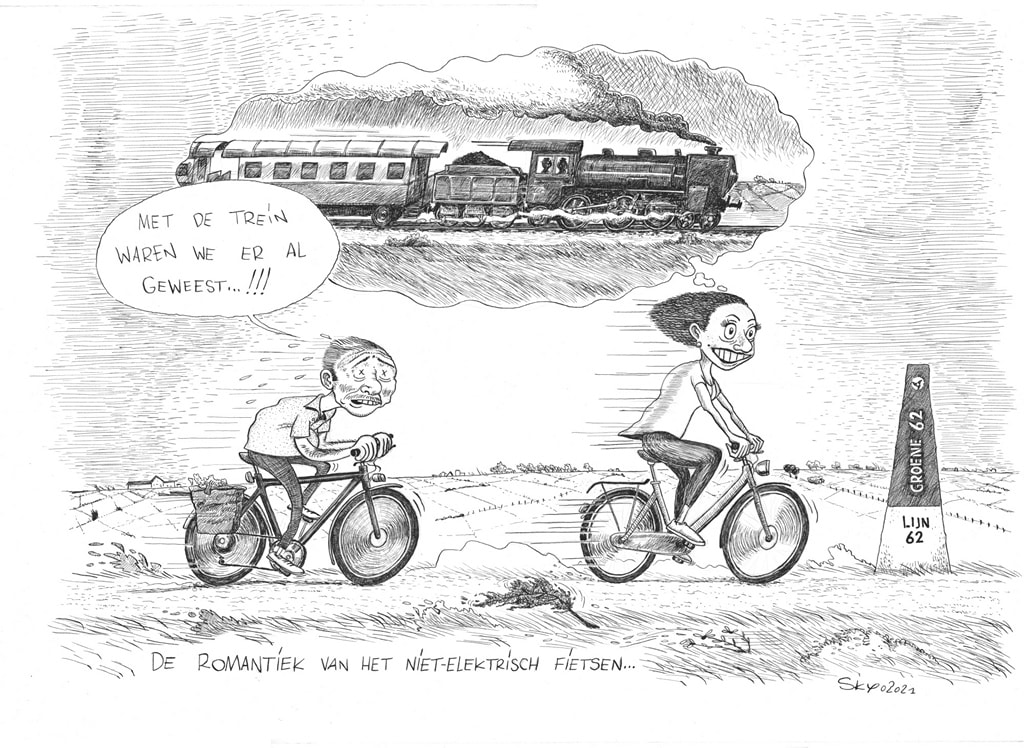
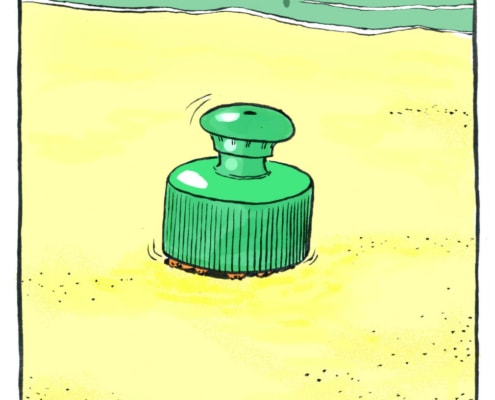
Het is o.a. terug te vinden in Chinese en Japanse prentkunst en schilderijen, in bepaalde beeldverhalen (strips), in vroegere kunststromingen (impressionisme, post-impressionisme, kubisme, …) en gaat zeker al terug naar schilderingen en handstencils gemaakt door Neanderthalermensen z’on 40.000 jaar geleden(!).
(c) Franquin
Hokusai
Is inscendente kunst een nieuwe kunstbeweging?
Misschien. Het idee om inscendentie te benadrukken en de participatie van de kijker is om een kwaliteit te belichten die al millennia lang bestaat in menselijke kunst en expressie.
Op het eerste zicht zijn er veel overeenkomsten met Postimpressionisme (wat nooit echt een beweging was maar gewoon een label).
Echter, veel Postimpressionisen hadden een uitgesproken subjectieve benadering van hun onderwerpen. Inscendente kunst streeft ernaar om het subjectieve en het objectieve te inscenderen, d.w.z. ze integreren in een meer holistische benadering.
Ergens is dit een nieuwe inkleuring van Realisme/Naturalisme, met daarbij een expliciete breuk met fotografie.
Veel van je kunst beantwoordt niet ten volle aan de inscendente criteria!?
Ongetwijfeld! Maar het werk gaat wel steeds meer in die richting.
Wat is het verband met de ‘actieve context’ filosofie?
Beweging is cruciaal.
Inscenderen is de meest fundamentele vorm van contexten aangezien het een somatopsychisch proces is waar mentale subjectiviteit en het lichaam-als-object wegvallen, om plaats te maken voor een soort lichamelijk handelen.
Simpeler gezegd: intuïtie, (voorheen) onbewuste processen nemen de perceptie over, en soms ook andere activiteiten.
Inscendente kunst is geen illustratie van een idee of een statische representatie maar probeert om een levende context weer te geven waarin men kan participeren (of niet).
Moet ik al deze achterliggende theorie begrijpen om het werk te appreciëren?
Zeker niet! Maar het kan helpen om te begrijpen waar je naar zit te kijken, en om inscendente kwaliteiten te herkennen doorheen de kunstgeschiedenis.
Wat is het verschil tussen transcendente en inscendente kunst?
Transcendente kunst neigt heel sterk naar utopische gedachten, en geeft veranderde bewustzijnsstaten weer, geidealizeerde beelden van hoe het “new age” eruit zou moeten zien. Over het algemeen is er meer afstand tussen de kijken en transcendent werk dan tussen de kijker en meer traditionele, naturalistische kunst. Inscendente kunst ligt dichter bij de wereld zoals we ze waarnemen.
Inscendance & l’art inscendantal
transcender
de trans « à travers, au-delà » + scandere « grimper » ; de PIE *skand
= bondir, bondir, grimper au-delà
transcendance
= la qualité ou l’état d’exceller, de surmonter, d’aller au-delà ou au-dessus de la gamme de l’expérience humaine normale ou physique
inscendance
= Qualité ou processus d’immersion dans la nature (nature intérieure/son corps et nature extérieure/le monde extérieur), vers une expérience complète, vers une participation totale
= immersion dans le monde vivant (holoflux)
l’art inscendantal
= un art qui offre des voies d’imagination primitive et génératrice vers l’inscendantal, c’est-à-dire les expériences humaines possibles de l’inscendance (y compris un avant-goût de l’holoflux) ;
L’art inscendantal en gros
Éloignement (visuel, émotionnel, spatial, etc.)
Participation primitive (comme pour la musique, cognitive et précognitive)
Immersion viscérale dans le sens (facilitant une érotisme de l’art, et non une herméneutique !) (savoir plus)
Le problème avec la transcendance
Dans de nombreux contextes, la transcendance est considérée comme un objectif, un état désiré, qu’il s’agisse de surmonter l’ego ou les limitations physiques ou matérielles. Très souvent, l’état du corps est nié au cours de ce processus.
Les adeptes religieux, les chercheurs spirituels, les transhumanistes, les adeptes de la réalité virtuelle, etc., recherchent généralement une forme de transcendance, c’est-à-dire une évasion.
Cela est très problématique, car cela ne permet pas de répondre aux nombreux problèmes du monde actuel ; au contraire, cela crée une division intérieure et cultive la résignation et la passivité.
La transcendance est bénéfique si elle n’est qu’une phase, elle peut être révélatrice, mais sans ancrage et sans effets sur l’organisme tout entier, elle n’a que peu de sens.
Les défauts de l’art transcendantal
© Alex Grey
L’art transcendantal a sans aucun doute ses mérites.
Cependant, il s’agit d’un mélange de fantaisie, d’expérience ressentie et/ou d’hypothèse. Il crée généralement une distance pour l’observateur, car les images sont inaccessibles ou difficiles à appréhender.
L’image transcendantale n’étant pas directement accessible, elle devient facilement artificielle, un plaisir pour les yeux superflu, une œuvre esthétique de science-fiction.
L’identification purement mentale à une image fantasmée est limitée.
L’art transcendantal ne doit pas être rejeté ; nous souhaitons simplement le compléter par des moyens de représentation plus accessibles.
Qu‘est-ce que l’inscendance ?
Lorsque nous nous élevons, nous reculons ou nous nous abaissons,
retournant à notre nature innée, à notre essence pré-rationnelle.
L’inscendance implique une approche plus contextuelle et intuitive de la vie et de notre environnement,
ancrée dans le monde physique (corps et environnement/contexte plus large).
C’est un processus intérieur de connexion, de relation, d’intégration.
Elle implique une équanimité avec tout ce qui est, qu’il soit joyeux ou douloureux.
Elle influence la conscience, l’action et la responsabilité.
On pourrait également dire que l’inscendance consiste à trouver la transcendance dans la vie quotidienne, ce qui modifie fondamentalement notre réalité quotidienne.
L’inscendance pourrait s’avérer indispensable pour affronter pleinement la crise écologique, l’urgence climatique et la crise du sens.
L’art inscendantal
L’art inscendantal aspire à combler ou à réduire le fossé entre l’esprit, le monde et le corps.
Des images et des formes directes et vivantes incitent à la participation, à l’empathie, à la sympathie et à la compassion.
Durant le processus de création, sujet et objet sont indissociables. Ne faisant plus qu’un avec le sujet qu’ils cherchent à représenter, l’artiste (et le spectateur ?) se retrouve dans une zone d’impressions, d’intuitions et d’expressions à la fois créative et subtile.
L’art inscendantal vise à susciter une compréhension de l’infinie richesse de la nature et du monde, modifiant ainsi la perception primaire de l’observateur. Une œuvre d’art peut nous faire porter un regard différent sur le monde après l’avoir vue, modifiant même notre conception de la réalité. Les paysages tardifs de David Hockney en sont un excellent exemple, faisant ressortir des aspects de couleur et de spatialité qui échappent à beaucoup d’entre nous. Au cœur de cette caractéristique essentielle se trouve l’ardeur de l’artiste à observer plus attentivement et à prendre conscience de son imagination primitive et génératrice, c’est-à-dire de la façon dont les images se forment inconsciemment par le corps et l’esprit, ce qui peut à son tour inspirer de nouvelles façons d’imaginer et de capturer les fruits sur toile, papier, argile…
© Fondation David Hockney
L’art inscendantal est généralement une combinaison d’abstraction et d’éléments photographiques. Il s’agit de la fusion de l’abstraction et du naturalisme, plus proche de la façon dont nous percevons réellement le monde, de notre perception différente et de la façon dont nous pouvons y participer. Il cherche à libérer le potentiel imaginatif humain.
Il vise à questionner ce qui est considéré comme « réel » ou « réaliste », en rompant avec les conventions omniprésentes de la perspective linéaire et de la photographie. C’est pourquoi nous avons inventé le terme « phorographie », pour souligner l’importance du « phororéalisme ».
Comme le faisait remarquer David Hockney, en peinture chinoise, on dit qu’il faut l’œil, le cœur et la main pour créer de grandes œuvres. Deux ne suffisent pas.
Plus d’infos dans la FAQ ci-dessous.
Notions/concepts connexes
« (L’inscendance est) l’impulsion non pas à s’élever au-dessus du monde (transcendance), mais à y pénétrer, à en rechercher l’essence.» (Thomas Berry)
Questions fréquemment posées
Cet art inscendantal est-il quelque chose de nouveau ?
© Franquin
Hokusai
L’art inscendantal est-il un autre mouvement artistique ?
Cela pourrait se produire un jour. L’idée de mettre l’accent sur l’inscendantalité et la participation de l’observateur vise à souligner une qualité présente depuis des millénaires dans l’art et l’expression humaine.
Au premier abord, on peut percevoir de nombreuses similitudes avec le post-impressionnisme (qui n’a d’ailleurs jamais été un mouvement, mais seulement une étiquette).
Cependant, nombre de post-impressionnistes adoptaient une approche excessivement subjective de leur sujet.
L’art inscendantal aspire à transcender les approches subjective et objective, en les intégrant dans une perspective holistique.
D’une certaine manière, il s’agit d’une nouvelle approche du réalisme/naturalisme, rompant explicitement avec la photographie (voir : phorographie).
De notre point de vue, nombre de tableaux de Van Gogh relèvent de l’art inscendantal.
In a way this is a new approach to Realism/Naturalism, but explicitly breaking away from photography (see: phorography).
From our point of view many of Van Gogh’s paintings are inscendental in nature.
Une grande partie de vos œuvres ne sont pas à la hauteur de cet idéal ou de cette qualité inscendante ?!!
Sans aucun doute ! Mais l’art évolue de plus en plus dans cette direction.
Quel est le lien entre l‘inscendance et l’holoflux ?
L’inscendance peut être considérée comme une porte d’entrée vers l’holoflux, ou du moins, pour en avoir un aperçu d’holoflux.
L‘inscendance requiert-elle une autre forme d’imagination ?
L’inscendance peut être atteinte sans imagination, mais si l’art ou l’image sont impliqués, une imagination générative est essentielle pour une approche plus directe et participative, permettant de régénérer ou de co-générer de manière créative ce à quoi l’on est confronté.
Autrement dit : une perspective statique, photographique, ne peut entrer en résonance avec la réalité dynamique du monde (et de l’œuvre d’art, le cas échéant).
En musique, les qualités fluides et ineffables sont généralement évidentes et faciles d’accès, et en vidéo également dans une certaine mesure (mais la dichotomie sujet-objet y est généralement beaucoup plus présente), déclenchant une résonance et une sensibilité fine chez l’auditeur ou le spectateur. Cette résonance dynamique peut aussi être déclenchée visuellement, par le biais du corps et de l’imagination générative.
Quel est le lien avec votre philosophie de contexter/contexte actif
Le mouvement et le contexte sont essentiels.
L’inscendance est un mouvement vers la contextualisation (une forme d’imagination générative), car notre corps est le contexte le plus immédiat avec lequel nous pouvons être intimement en contact. L’ascension est un processus somatopsychique où la subjectivité mentale et la conception du corps comme objet s’estompent pour laisser place à un état d’agentivité somatique.
En d’autres termes : l’intuition, les processus (autrefois) inconscients élargissent la perception, et d’autres fonctions de l’organisme, le contexte actif, informe l’organisme.
Contexter est participative.
L’art inscendantal n’est pas une illustration d’une idée ni une représentation statique ; il cherche à transmettre un contexte vivant auquel on peut participer (ou non).
Ai-je besoin de connaître cette théorie sous-jacente pour apprécier l‘œuvre d’art ?
Pas du tout ! Mais cela peut vous aider à savoir quoi regarder et à découvrir des qualités émergentes à travers les mouvements artistiques, tout au long de l’histoire de l’art.
Quelle est la différence entre l‘art transcendantal et l’art inscendantal ?
L’art transcendantal tend à être largement utopique, représentant des états de conscience modifiés et une image idéalisée de ce que serait le « nouvel âge ».
De manière générale, la distance entre le spectateur et l’art transcendantal est encore plus grande qu’entre le spectateur et l’art naturaliste plus traditionnel.
L’art inscendantal, quant à lui, cherche à transcender la dualité dans sa conception de la forme, de l’espace, du mouvement et du temps, en invitant le spectateur à participer et à s’engager par le biais de la perception et de l’imagination créatives.
D’où vient le terme « inscendance » ?
De temps à autre, nous aimons inventer de nouveaux termes. Après avoir longuement réfléchi à un mot qui décrirait ce qui a émergé dans notre travail artistique ces dernières années, tout en nous penchant sur nos difficultés avec le terme « transcendance », « inscendance » nous a semblé le plus approprié.
Une rapide recherche sur Internet a révélé que quelqu’un nous avait devancés à la fin des années 1990 : Thomas Berry (1914-2009), historien de la culture et écologiste spirituel.
À notre grande surprise, la signification qu’il donnait à « inscendance » correspondait assez bien à notre réflexion ; elle a même élargi notre perspective initiale.
Qu’en est-il de la musique ? La musique peut-elle être inscendante ?
La musique est sans doute la forme d’art la plus inspirante qui soit. Une musique qui nourrit l’âme et qui émeut le corps et l’esprit. On la retrouve dans de nombreux genres.
Des conseils de lecture ?